
Jump Starter Guide: Choosing Power for Your Vehicle
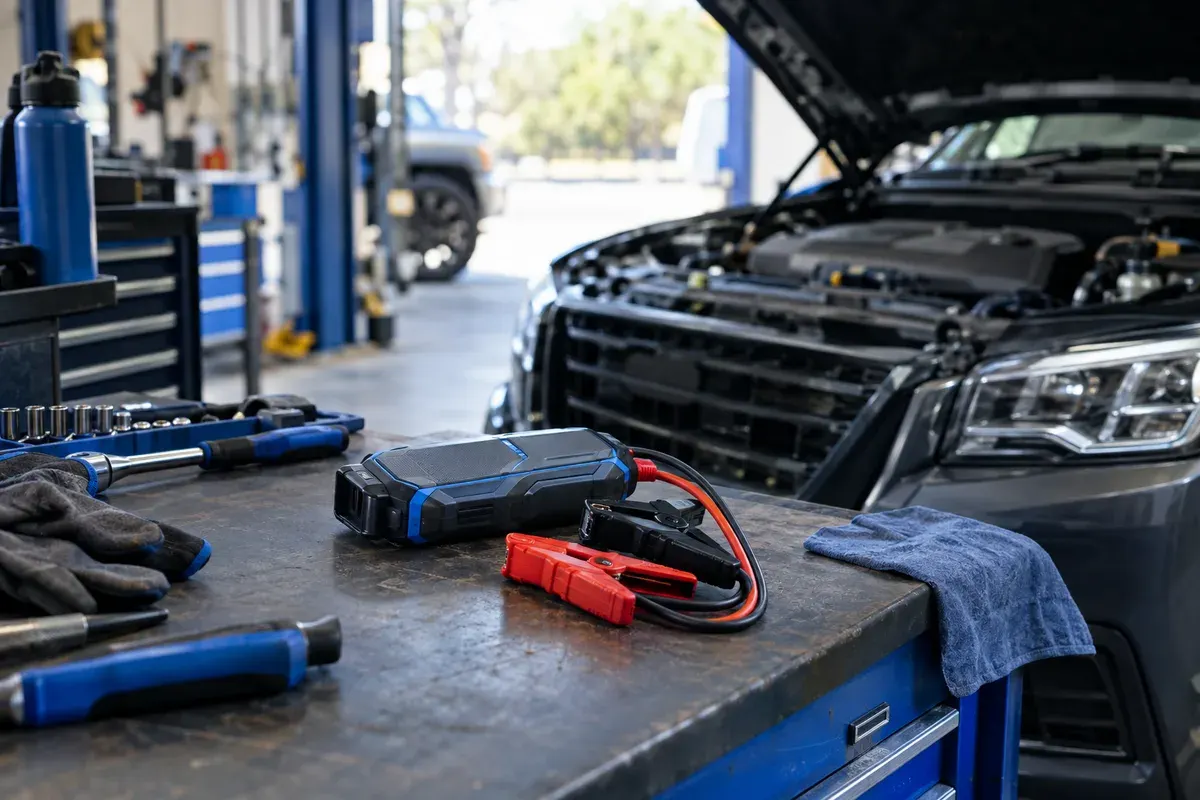
Choose a jump starter that matches your vehicle’s battery voltage and petrol or diesel engine size, rather than peak amps alone. Most passenger vehicles use 12V systems. A compact lithium pack suits occasional emergency starts, while a battery charger is the better tool for restoring and maintaining a discharged battery.
Key takeaways
- Match a 12V jump starter to a 12V vehicle system, not a 24V system.
- Petrol and diesel engine limits are separate specifications.
- Peak amps and cranking amps measure different aspects of starting output.
- IP65 means dust-tight protection and resistance to water jets, not immersion.
- A jump starter provides starting assistance; a charger restores battery charge.
In this article
The most common mistake is buying the biggest peak-amp number without matching the starter to the vehicle. Start with battery voltage and engine size, then consider starting output, storage and weather protection. Lights left on, short trips and cold mornings can all leave a battery unable to crank the engine.
TerrainX
Jump starter types and what each suits
| Type | Best fit | Main trade-off |
|---|---|---|
| Portable lithium battery pack | Emergency starts in cars, utes and 4WDs | Compact size; periodic recharging |
| Lead-acid booster pack or trolley | Workshops and repeated use near storage | Greater weight and bulk |
| Capacitor-based starter | Short bursts of starting assistance | Charging method and available energy vary by design |
| Battery charger | Restoring charge and maintaining parked vehicles | Time and an external power supply |
A jump starter supplies a brief burst of power. A charger works over a longer period, so the two tools solve different problems.
Four specifications that decide the choice
- System voltage: most passenger vehicles use 12V. Some trucks use 24V, which needs compatible starting equipment.
- Engine compatibility: match the stated petrol or diesel capacity in litres. Diesel engines generally require more starting effort than similarly sized petrol engines.
- Starting output: peak amps describe a brief maximum; cranking amps describe sustained starting output under specified test conditions. NestPath gives 1,000 to 2,000 peak amps as an orientation for small to medium petrol cars. The engine rating remains the more useful filter because peak figures alone do not describe the whole starting performance.
- Weather protection: IP65 means dust-tight protection and resistance to water jets. It does not mean the unit can be submerged.
Buying mistakes to avoid
A high amp figure cannot make a 12V unit suitable for a 24V system. Likewise, a petrol engine limit is not a diesel limit. USB outlets and torches are useful extras, but engine compatibility, sound clamps and suitable electrical protection matter more.
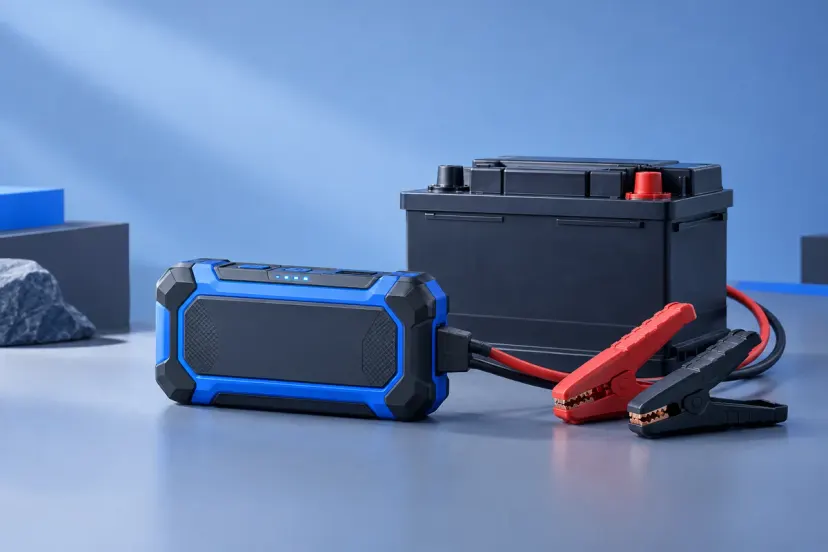
Our TX300 for 12V petrol and diesel engines
Our Super Starter range includes the TX300 engine super starter for 12V petrol engines up to 6.5L and diesel engines up to 4.5L.
| Specification | TX300 |
|---|---|
| Vehicle system | 12V |
| Maximum petrol engine capacity | 6.5L |
| Maximum diesel engine capacity | 4.5L |
| Rated charge and discharge cycles | Half a million |
| Dust and water resistance | IP65 |
The TX300 delivers the big burst on every start, so your battery is not doing it alone. Its separate petrol and diesel limits make the initial suitability decision straightforward.
Safety features worth prioritising
Reverse-polarity protection, short-circuit protection and over-temperature protection are useful safeguards in a portable battery jump starter. Spark-resistant connection systems also reduce risk around the battery.
These protections serve different purposes. Reverse-polarity protection addresses reversed clamps; short-circuit protection addresses an unintended connection between positive and negative. Neither makes a damaged battery safe to jump-start.
Clamp reach matters too. Leads must reach the vehicle’s designated starting points without being stretched across belts, fans or hot components. A secure storage case keeps the clamps separated from loose metal tools.
How to use a portable jump starter safely
Follow the vehicle and jump starter manuals for designated connection points, activation and cranking limits. For a conventional portable 12V pack, the basic sequence is:
- Make the vehicle safe. Park securely, switch off the ignition and accessories, and keep flames and cigarettes away.
- Inspect the battery. Stop if it is cracked, leaking, swollen, frozen or giving off a strong rotten-egg smell.
- Connect positive first. Attach the red clamp to the designated positive terminal or jump point.
- Connect the negative lead. Use the designated earth point, generally a suitable engine or chassis point away from the battery and moving parts.
- Activate and start. Use a brief starting attempt within the equipment’s cranking limit. Repeated long attempts can overheat equipment.
- Disconnect after starting. Switch off the pack, remove the negative clamp, then remove the positive clamp.
Keep hands, leads and clothing clear of fans and belts throughout. A jump starter is not a device to leave connected for ongoing battery charging.
Show the data
| Step 1 | Make the vehicle safe |
|---|---|
| Step 2 | Inspect the battery |
| Step 3 | Connect positive first |
| Step 4 | Connect the negative lead |
| Step 5 | Activate and start |
| Step 6 | Disconnect after starting |
Storage and battery care between trips
For lithium battery packs, a dry storage temperature of 10°C to 25°C helps preserve battery life. A vehicle cabin can become much hotter, so shaded, insulated storage is preferable to a dashboard or direct sun.
Inspect charge level regularly and recharge after use. Keep the case dry and the clamps clean. Battery capacity in watt-hours describes stored energy, not cranking strength, so it cannot replace an engine compatibility rating.
After a successful jump-start, a suitable charger is a better way to restore a deeply discharged battery than relying on a short drive. Repeated flat batteries warrant a battery and charging-system test.
Frequently asked questions
How long does a portable jump starter hold its charge when not in use?
A charged lithium jump starter commonly holds usable charge for several months, although temperature, battery condition and standby electronics affect retention. A monthly charge-level check is a practical routine, particularly before a remote trip.
Can a jump starter be used on a motorcycle or boat battery?
Yes, provided it supports the battery’s voltage, chemistry and engine requirements. Motorcycles may use 6V or 12V systems, while boats can have multiple battery banks; marine starting also requires particular care around fuel vapours and ventilation.
What are the signs that a battery is too dead for a jump starter?
Cracking, leakage, swelling or freezing means the battery is unsafe to jump-start, regardless of its charge level. A pack failing to detect a very low-voltage battery can also prevent starting, but does not by itself prove the battery is beyond recovery. Bypassing detection or repeatedly forcing a start is not a safe diagnosis.
Is it better to buy a jump starter or a battery charger?
Buy a jump starter for immediate starting assistance away from power, or a charger for restoring and maintaining battery charge. A vehicle used infrequently often benefits more from a suitable maintenance charger, while a jump starter is useful emergency equipment on the road.
Can I leave a jump starter connected to my car battery?
No, a portable jump starter should be disconnected after the engine starts using its specified shutdown sequence. Extended connection is not a substitute for a battery charger or maintainer designed for that purpose.
Sources
- Best Jump Starter Australia 2026nestpath.com.au
- What are the Australian standards for IP ratings? IP65 vs IP67 Guide - China LED Screens Manufacturersostron.com
- What’s the Optimal Lithium Battery Storage Temperature? Balancing Safety & Longevitywiltsonenergy.com
Research and sources from Crush: AI ads
Written with help from AI.
About TerrainX
The TerrainX TX300 lives under the bonnet and takes the peak load on every start. 1000A supercapacitor starter, no lithium, Bluetooth app, 2-year warranty. Australian-owned.
Visit TerrainX